The Right Pickleball Bag for Every Pickleball Player and Budget
Good pickleball bags do three things a regular sports bag can't. They protect your paddles from scratches and heat, they hang on the court fence so your gear stays off wet ground, and they keep sweaty shoes away from everything else. This guide covers every major style, one side-by-side comparison of all our picks, reviews of bags from CRBN, Selkirk, JOOLA, Franklin and others, and the features that still matter three games into open play.
It's written for every kind of pickleball player: the beginner who just bought a first paddle, the weekend regular who carries two paddles and a towel, and the tournament grinder who packs for a full day. Pick your style, scan the table, then see today's price and availability on Amazon.
Amazon prices move often. The button shows today's price and stock.
Why You Need a Dedicated Pickleball Bag (Not a Gym Bag)
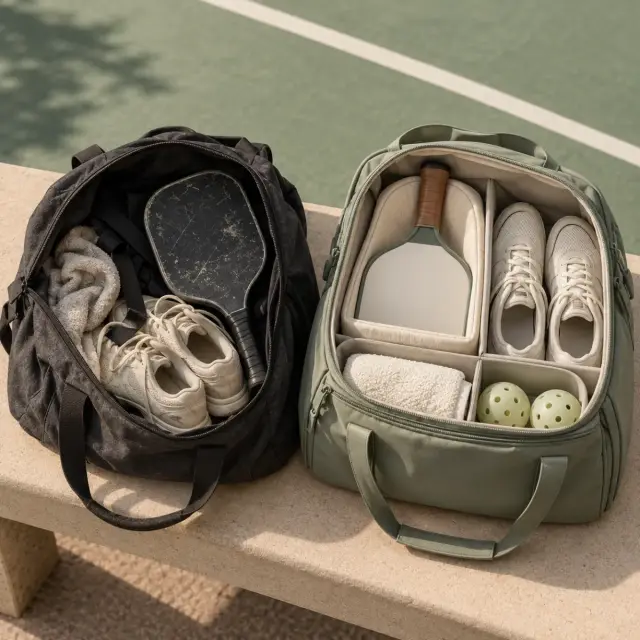
A gym bag is one big cavity. Your paddle ends up face-down under court shoes, the balls roll to the bottom, and your keys vanish. Annoying on day one. Expensive by month six: carbon and fiberglass paddle faces scuff against zippers, shoe soles and hard plastic bottles, and a worn face loses some of the grit that gives you spin.
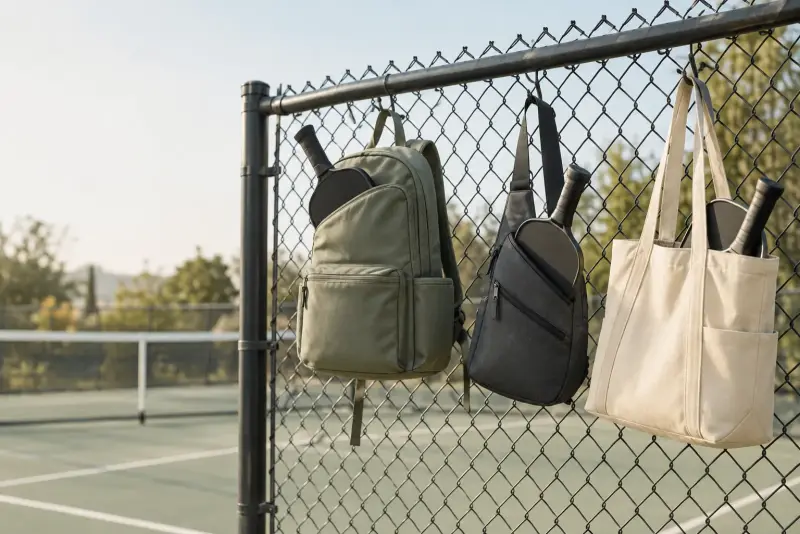
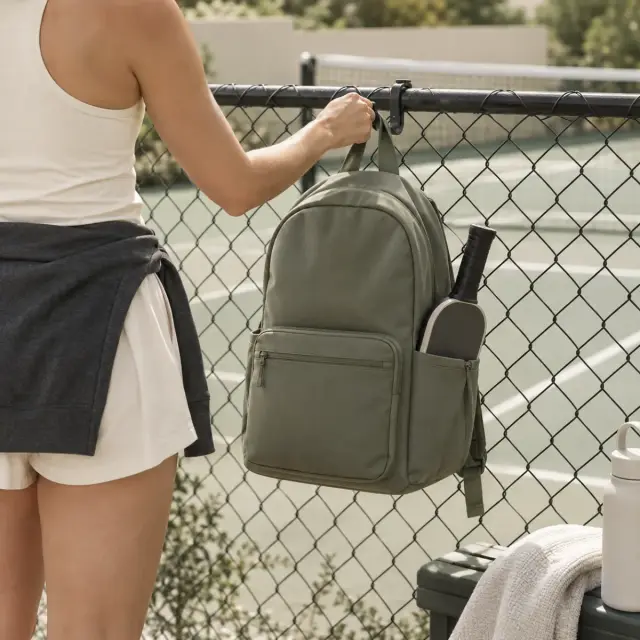
A purpose-built bag fixes this with dedicated spaces. A padded sleeve (often thermal-lined) is how you protect your paddles from both scratches and a hot trunk. A ventilated shoe compartment keeps odor and court grit sealed off. A fence hook lets you hang everything on the chain-link at the pickleball court instead of leaving it on a damp surface or crowding the bench.
Then there's plain organization. When phone, wallet, balls and overgrip each have a home, you pack in two minutes and don't leave anything behind after a pick-up session. Long-running forum threads from crossover tennis players say the same thing again and again: the first part to fail on a cheap bag is almost always an outer pocket or a zipper, not the main fabric.
The upside is that proper pickleball gear storage doesn't have to be pricey. Budget models often get the core features right, so it pays to compare a few before you settle.
Pickleball Bag Types: Backpack vs Sling Bag vs Duffel vs Tote
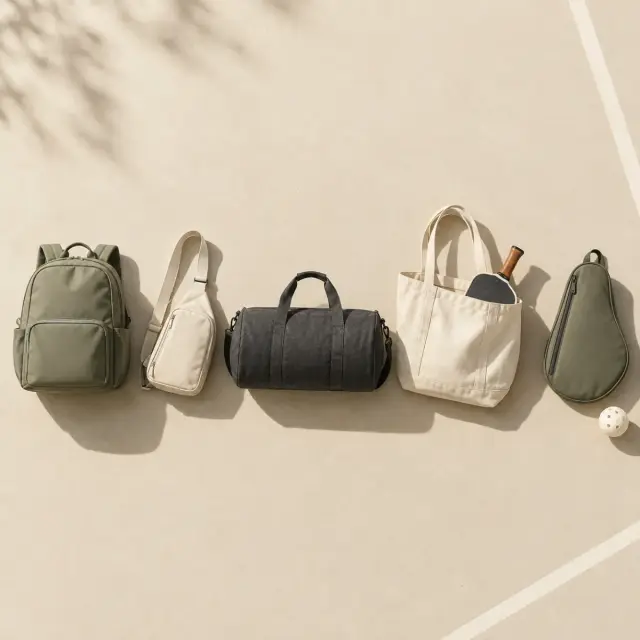
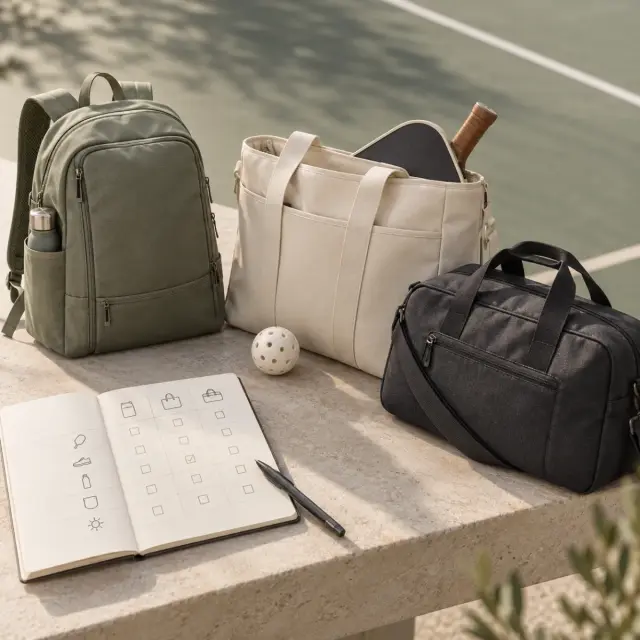
Search "pickle ball bag" or "pickleball bag" and you'll meet the same five styles. Each trades capacity against portability.
Pickleball Backpacks
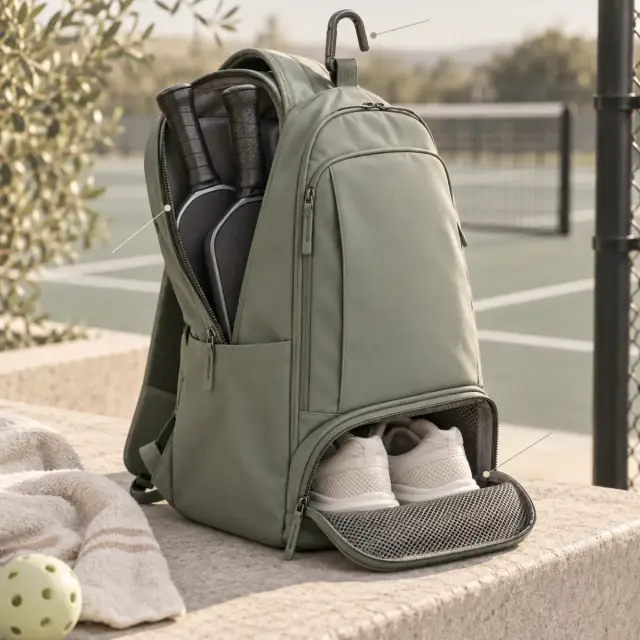
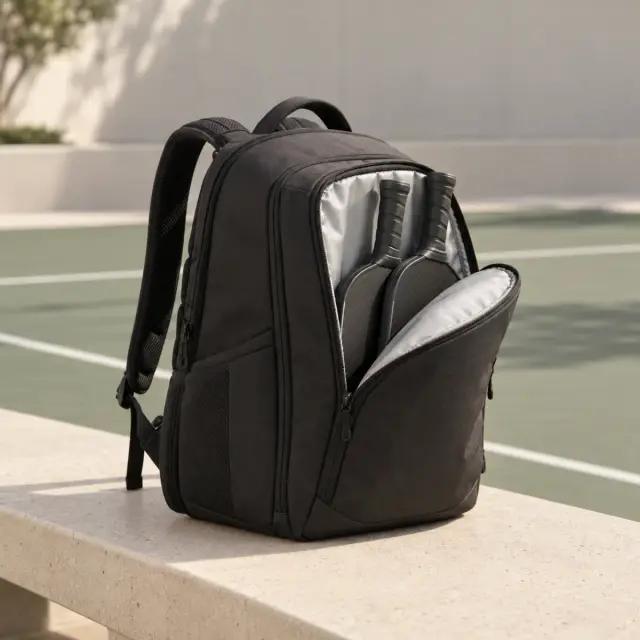
The pickleball backpack is the default for good reason. Two shoulder straps spread the load, so a bag holding paddles, shoes, a bottle and a change of clothes still feels easy to carry from the parking lot. Most put a padded paddle sleeve against the back panel, a shoe tunnel at the bottom and bottle pockets on each side. Some add a laptop sleeve, which makes a backpack style bag the smart pick if you head to the courts straight from work.
Best for: regular players, commuters, anyone playing two to four times a week.
Pickleball Sling Bags and Crossbody Styles
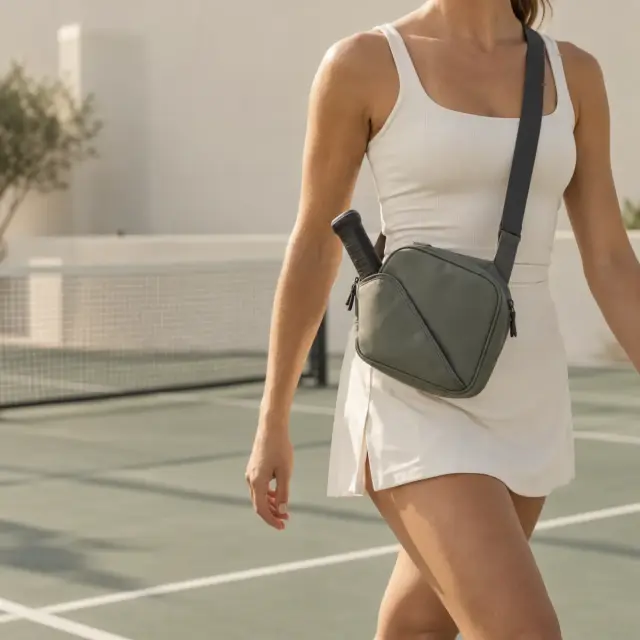
A pickleball sling bag is the lightest option: one strap across the body, room for a paddle or two, a sleeve of balls, keys and a phone. It's the bag you grab for an hour of open play. The trade-off is weight distribution. Overload it with shoes and a big bottle and your shoulder will complain by the second block. An adjustable crossbody strap lets it ride high and tight while you walk, which is what makes a crossbody pickleball bag comfortable.
Best for: casual players, short sessions, people who wear their court shoes to the court.
Duffel and Tote Pickleball Bags
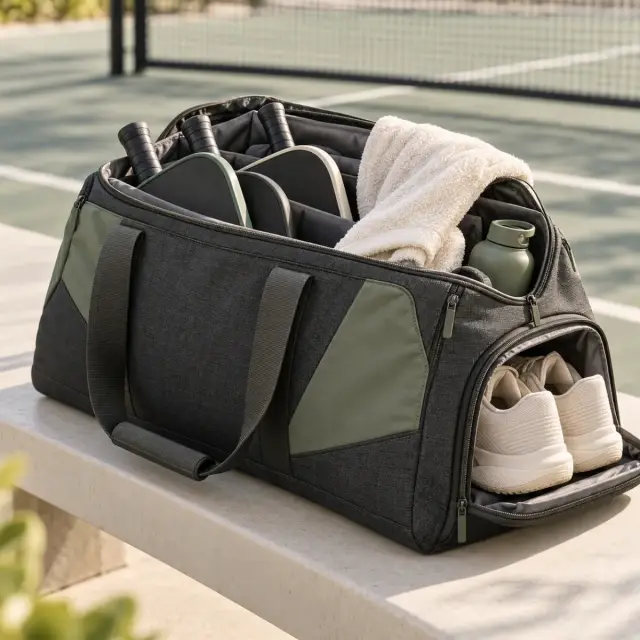
A duffel (brands spell it duffle just as often) is the event-day workhorse. Wide opening, large capacity, and usually a full-length paddle section with room for a towel, snacks and a spare shirt. It's also the heaviest to haul, so look for a padded strap and, ideally, hideaway backpack straps.
A tote bag sits at the other end: open top, fast access, and stylish enough to double as an everyday bag. The good ones hide a padded paddle sleeve and a zipped pocket inside. Pure fashion bags without paddle padding are fine for balls and water, less fine for a carbon paddle.
Best for: duffels for long event days and coaches; totes for social players who want one bag on and off the court.
Tennis Bag vs Pickleball Bag: What's the Difference
A tennis bag is built around a racket. Long frames mean long, narrow compartments, often in 6- or 9-pack shapes. A paddle is shorter and wider, so it slides around in there. Plenty of crossover players use Head or Wilson tennis bags and they work, but a bag designed for paddles gives you a snugger sleeve, a fence clip and a real shoe tunnel. Padel bags have the same problem in reverse: close in size, not quite right.
Convertible and Multi-Sport Bag Designs
Convertible bags switch modes: a sling that clips into a backpack, or a duffel with stowable straps. They make sense if you play more than one sport or split time between league nights and weekend events. Check the conversion hardware closely, because plastic buckles are the usual weak point.
Still torn between styles? Seeing what each one holds, and what it costs today, usually settles it fast.
Compare current backpack, sling and duffel prices on Amazon.
How to Choose a Pickleball Bag: Key Features Checklist
Run any bag you're considering through this list. If it misses two or more items that matter to you, keep looking.
Paddle Compartment and Paddle Holder Space
The paddle compartment is the whole point. You want padding on both sides, a soft lining so the face doesn't scratch, and a thermal layer if you play in heat. Paddles left in a hot car can suffer core and edge-guard damage, and an insulated sleeve buys you time. Measure your pickleball paddle first: elongated shapes run longer than standard ones, and a paddle holder that's too tight becomes a daily fight.
How Many Paddles Fit: 2 vs 4 Paddles
A bag that fits 2 paddles covers most players: your main paddle plus a backup for when a grip gets slick or an edge guard cracks. Competitive players, coaches and families sharing one paddle bag should look for room for 4 paddles or more. Simple rule: if you ever bring loaners for friends, size up. If you play solo and walk to the courts, a light crossbody is plenty.
Fence Hook Attachments for the Court
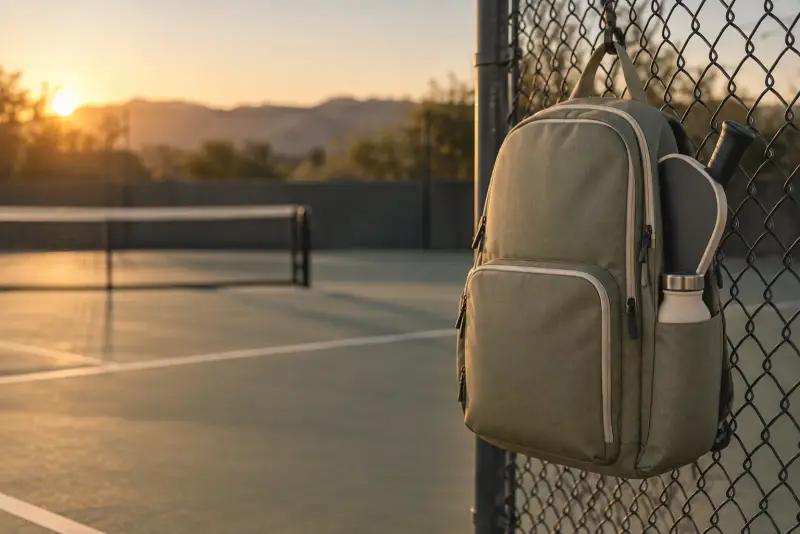
A fence hook, usually a carabiner-style clip on the top handle, hangs your bag on the court fence. That keeps it off wet ground, out of the walkway and easily accessible between games. Metal clips outlast molded plastic ones. Nearly every serious model has one now, so don't accept a bag without it.
Shoe Compartment and Large-Capacity Storage
A separate shoe compartment is the feature people don't know they need until they've opened a closed bag in August. Mesh panels or grommets let it ventilate. For big loads, compare the main compartment volume in liters (Selkirk's 35L Pro Line tour backpack is a useful big-bag benchmark) and check there's ample space for a jacket and towel without squashing the paddle sleeve.
Water Bottle Holder and Zippered Pockets
An outside water bottle holder, elastic mesh or an insulated sleeve, saves you unzipping the main bag at every changeover. Inside, you want at least one zippered, soft-lined pocket for phone and sunglasses, plus a small key pouch. Side pockets deep enough for a large bottle sound minor and make a big difference.
Water-Resistant and Weather-Resistant Materials
Most bags use polyester or nylon. Nylon is generally tougher against abrasion; polyester holds color well and usually costs less. A coated, water-resistant fabric shrugs off a passing shower or damp grass. "Weather-resistant" usually means that coating plus covered or sealed zips. Truly waterproof bags are rare, so treat that word on a listing with caution. Eco-friendly versions made from recycled polyester are growing and perform the same in daily use. More on denier and zip quality in the materials section below.
Shoulder Straps and Customizable Comfort
Padded shoulder straps and a breathable mesh back panel matter on hot days. Look for a sternum strap on bigger backpacks, adjustable length on slings, and a customizable setup (removable straps, modular pouches, name patches) if you like to tailor your kit. With a heavy load, comfort beats looks.
Quick checklist:
padded paddle sleeve
right paddle count
metal fence clip
ventilated shoe tunnel
outer bottle pocket
soft-lined valuables pocket
coated fabric
padded straps
Found a bag that ticks your boxes? Check today's price before your size or color sells out.
Amazon updates prices daily. See the current one in a click.
Pickleball Bag Comparison Table: Price, Weight & Paddle Capacity
We couldn't find a single guide that puts every recommended bag side by side, so here it is. Price is shown as a tier rather than a number, because Amazon prices change daily; the button shows the live figure. Paddle capacity is approximate and depends on paddle thickness and edge guards.
Warranty terms vary by brand and seller, and pocket counts can change between model years. Confirm both on the listing before you order. Found your row? The button takes you straight to it.
Best Pickleball Bags in 2026: Top-Rated Picks Reviewed
Each pick below wins a specific job. We looked at design and feel, how well the storage is planned, comfort when fully loaded, and value for money in its class.
Best Overall Pickleball Bag
CRBN Pro Team Backpack. If you want one bag that gets everything right, this is it. It's the pick that editorial reviewers and regular players keep landing on for a reason: a protected paddle compartment with thermal lining, a separate shoe compartment, a fence hook and enough room for a normal session without looking like you're moving house.
Who it suits: regular players who want one bag for league nights, drills and the occasional tournament.
Selkirk Pro Line 2.0 Tour Backpack (35L). The big-capacity backpack from a brand players already trust for paddles. At 35 liters it swallows paddles, shoes, a change of clothes and a jacket, with enough pockets that nothing rattles around loose.
Who it suits: players who carry a lot but still want backpack comfort.
Mangrove Pickleball Bag. A compact, easy grab-and-go bag that holds the essentials and nothing more. If you already wear court shoes to the court, this is all the bag you need.
Who it suits: casual players, walkers and cyclists heading to nearby courts.
Pros: light, sits close to the body, quick access.
Cons: limited shoe and clothing room.
Value verdict: strong for its size. Check the listing's current colors; they rotate.
JOOLA Tour Elite Pro Pickleball Bag. JOOLA's tour bag is what serious competitors carry on a full event day. Spacious main section, a long paddle section with room for several paddles, and space for shoes, towel and food.
Who it suits: competitive players, coaches, anyone carrying for two.
Pros: capacity, sturdy build, pro-level layout.
Cons: heavy and bulky for a quick hit.
Value verdict: premium, but one bag instead of two.
Top picks by category only go so far. These picks match specific players and budgets.
Best Budget Pickleball Bag
Franklin Sports Pickleball Bag. Franklin keeps things simple: a paddle sleeve that fits two paddles, room for balls and a bottle, and a fence clip. You give up premium fabric and extra pockets. You keep everything a beginner actually uses. It sits comfortably in the budget tier; tap through for today's number, since Amazon pricing shifts.
The best pickleball bag for women is a fit question more than a color one. Many standard backpacks are cut for longer torsos, so straps sit too wide and the bag hangs low. Look for adjustable, contoured straps, a shorter back panel or a sling with a wide length range, and a lighter empty weight. The women's pickleball community on forums and social media leans toward slings and compact backpacks for exactly that reason. Our pick is the Mangrove Pickleball Bag for its compact build, with the Pro Team Backpack from our top picks when you need shoe storage.
If you want a handbag look, a padded tote gives you that without risking your paddle. A good pickleball tote bag for women has a structured base, a padded sleeve, and a zipped pocket for phone and keys. Olaben's canvas style and Holbrook's range are in this lane. Check that the sleeve is actually padded, not just a fabric divider.
Six Zero Pro Tour Bag or the JOOLA Tour Elite Pro. A full event day means spare paddles, two shirts, food, a towel and shoes. Get a bag with room for four or more paddles, a fence clip, and a shoe tunnel that won't leak smell into your clothes.
Best Pickleball Bag for Storage: Large-Capacity Picks
The Selkirk Pro Line 2.0 Tour Backpack (35L) is our storage pick if you want backpack comfort, and the Six Zero Pro Tour Bag if you don't mind a heavier carry. Both have ample room for a full day without packing like a puzzle.
Most bags here are unisex. If you want a bag for men and women in the same house to share, the Selkirk Core Line Day Bag is a neutral, adjustable, mid-size option that fits most frames well. It's a practical choice for women and men who share gear or rotate paddles.
Cute pickleball bags are having a moment: pastel colorways, patterned canvas, embroidered patches. Style is fine; just don't give up the padded sleeve and a fence clip for it. Olaben's canvas designs and several patterned crossbody bags on Amazon manage both, so look for one with real paddle padding and a pattern you love.
Pro Player Pickleball Bags: What Anna Leigh Waters and Top Pros Carry
This is the question almost no buying guide answers, so here's the honest version.
Anna Leigh Waters' Pickleball Bag Setup
Anna Leigh Waters is a long-time Paddletek athlete, and like most sponsored pros she carries her sponsor's tour bag at events rather than picking one off the shelf. The exact model changes as Paddletek refreshes its line, so her current bag is best confirmed on her social channels or at recent tour events. What matters for you: her setup is a large tour bag with room for several paddles, shoes and match-day extras, the same category as the duffels in our table.
What Other Pro Players Pack in Their Bags
Pro player gear follows sponsor gear. JOOLA athletes such as Ben Johns carry JOOLA tour bags, Selkirk's team carries Selkirk's Pro Line, and CRBN and Six Zero outfit their own players. Inside, the pattern is consistent: multiple identical paddles, fresh overgrips, a towel, spare shoes, electrolytes and a tournament-length snack supply. The lesson isn't to copy the logo. It's to match the capacity to how long you'll be at the courts.
Want the pro-level carry without the sponsor contract? Tour bags from the same brands sell to everyone.
What to Pack in Your Pickleball Bag: Complete Checklist
A great bag only helps if what's inside it works. Here's what to bring to the court.
0 of 8 packed
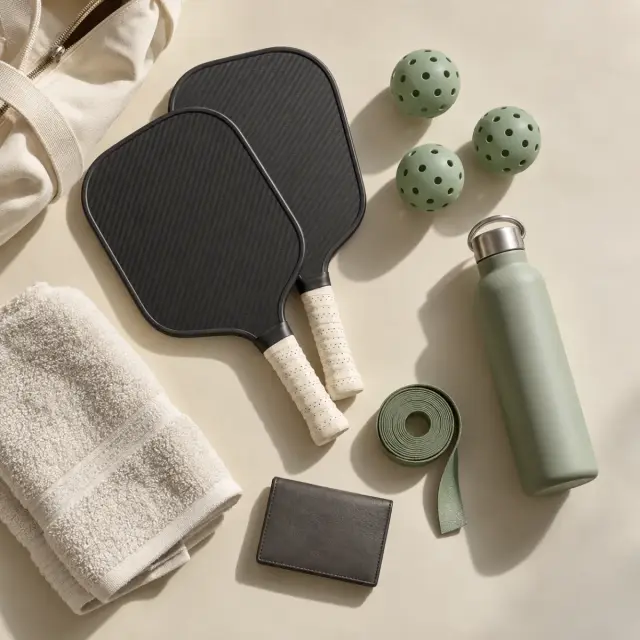
Essential Gear: Paddles, Balls and Overgrip
Extras: Wallet, Water Bottle and a Change of Clothes
Everything on this list fits a mid-size backpack. If it doesn't fit yours, that's the sign to size up.
Pickleball Bag Materials, Durability and Care Guide
Marketing copy says "durable." Here's how to check.
Fabric, Denier and Zipper Quality
Denier (D) measures fiber thickness. Higher denier generally means a heavier, more tear-resistant fabric: 600D polyester is a common baseline, while higher-denier nylon (840D and up, including "ballistic" weaves) handles abrasion from court surfaces and car trunks better. A PU or TPU coating adds water resistance. Zippers matter as much as fabric: YKK zippers are the industry reference for smooth, reliable running, and chunkier coil sizes on the main zipper last longer than thin ones. If a listing names the denier and the zipper maker, that's a good sign. If it only says "premium material," ask why.
How to Clean and Maintain Your Pickleball Bag
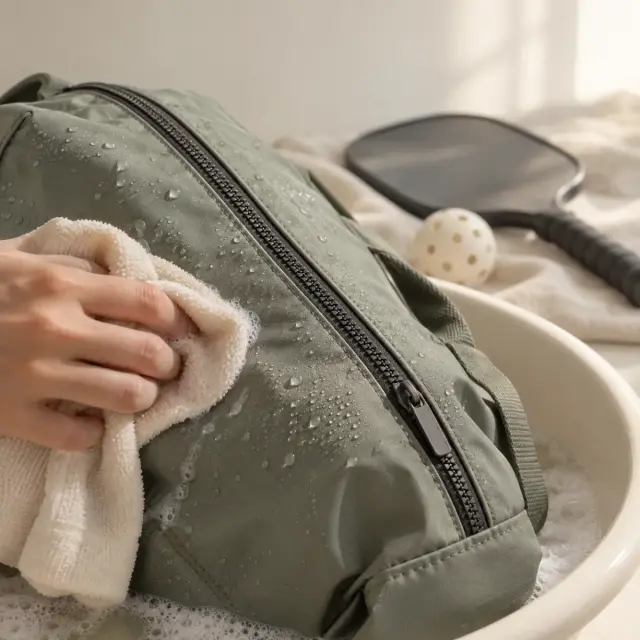
Most bags aren't fully washable in a machine; the padding and coatings don't love the spin cycle, so check the label first. For regular care: empty it, vacuum the grit out, then wipe or hand-wash with mild soap and cool water. Air-dry it open, never on a radiator. Air the shoe compartment after every session, and pull shoes out rather than storing them zipped in. Lubricate sticky zippers with a bit of zipper wax. Treated this way, a well-made bag lasts for years, which makes buying quality once the cheaper route.
Durability: fabric type and denier where published, zipper quality, hook material.
Comfort: strap padding, back-panel ventilation, carry weight when loaded.
Value: what you get for the price tier.
We built the comparison table from manufacturer listings and published specs, then checked them against long-term owner feedback on retailers and player forums like Talk Tennis. Where the specs weren't public, we said so rather than guessing. We re-check picks and availability regularly and update this page when models change.
Watch a side-by-side review of two premium pickleball bags — paddle sleeves, pockets and packed capacity compared, by Matt's Pickleball.
Pickleball Bag FAQ
What Are the Best Pickleball Bags?
For most players, the CRBN Pro Team Backpack. The Selkirk Pro Line 2.0 Tour Backpack wins on storage, the Mangrove on portability, the JOOLA Tour Elite Pro on event-day capacity and the Olaben canvas bag on style.
What Bags Do Professional Pickleball Players Use?
Their sponsor's tour bag: JOOLA players carry JOOLA, Selkirk players carry Selkirk. These are large bags built for several paddles and a full day's kit.
What Is the Best Budget Pickleball Bag?
Our budget pick is the Franklin Sports Pickleball Bag: paddle sleeve, room for balls and a bottle, and a fence clip. Amazon prices move, so check the current one.
What Pickleball Bag Does Anna Leigh Waters Use?
As a Paddletek athlete, she carries Paddletek tour gear. The exact model changes with each product refresh, so her recent tour appearances show the current version.
How Do I Choose the Best Pickleball Bag?
Start with how you get to the court and how long you stay. Short sessions call for a crossbody, regular play suits a backpack, long event days need a duffel. Then check the paddle sleeve, fence clip, shoe storage and straps.
What Are the Different Types of Pickleball Bags?
Five: backpacks, slings, duffels or tour bags, totes, and convertible designs that switch between modes.
What Is the Best Pickleball Bag for Women?
The one that fits your frame. Look for contoured, adjustable straps and a lighter build. A compact crossbody or small backpack suits most players, and a padded tote works if you want a handbag look.
Can I Use a Pickleball Bag for Work or Commuting?
Yes. A backpack with a laptop sleeve and a closed shoe tunnel doubles as a commute bag. Keep work items in their own zipped pocket, away from court grit.
Does the Brand Name Matter for a Pickleball Bag?
Less than you'd think. Brand matters for warranty support and consistent build, but a well-made bag from Franklin or Onix can beat a pricier logo if the layout is right. Pay for design and materials, not the name.
How Do I Maintain and Clean a Pickleball Bag?
Empty and vacuum it, hand-wash with mild soap, air-dry it open, and air the shoe section after every session. Machine-wash only if the label allows it.
Got your answer? The quickest next step is comparing today's prices on the picks above.
Quick recap. The CRBN Pro Team Backpack is our best overall pick, organized and comfortable, and right for most players. Need more room? The Selkirk Pro Line 2.0 Tour Backpack (35L) carries a full day. Want light and simple? The Mangrove sling is the easy grab-and-go choice.
Pick the style that matches how you play, then check the live price and stock on Amazon.